Are Yams and Sweet Potatoes the Same Thing?
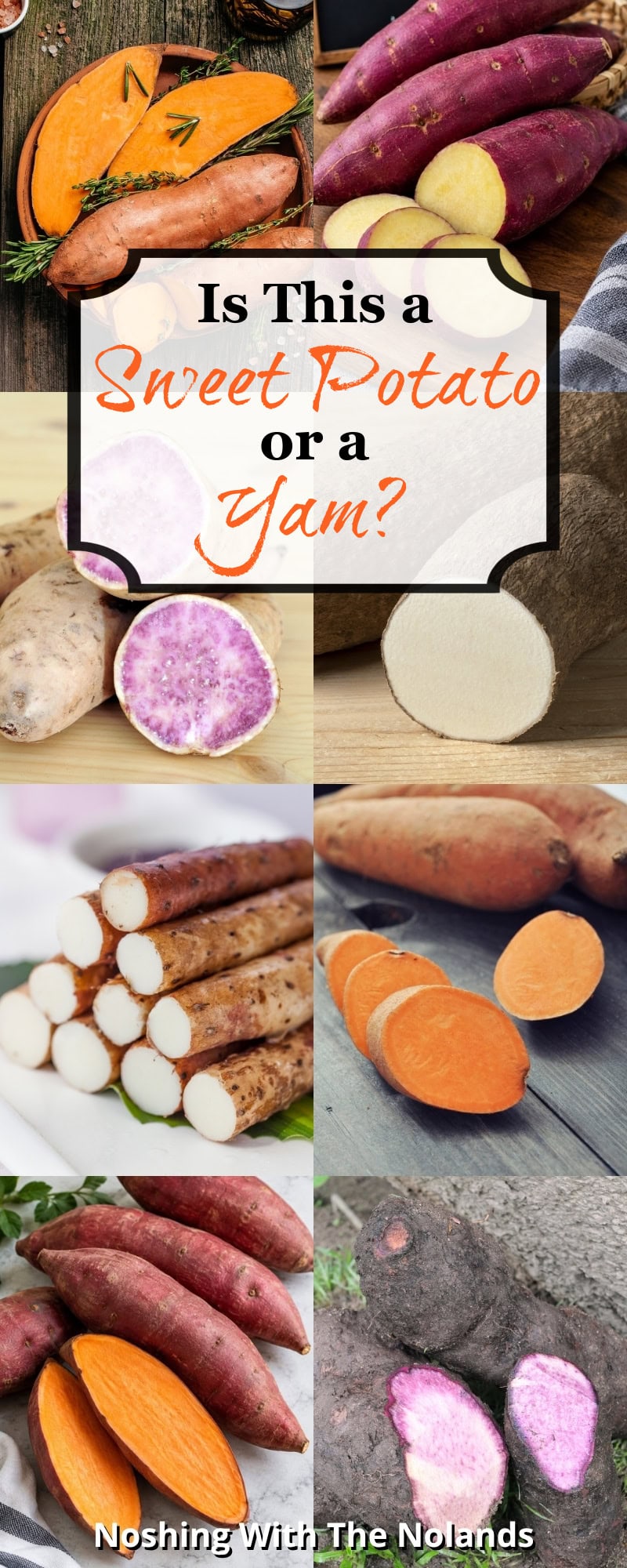
No. Yams and sweet potatoes are completely different plants, even though their names are frequently used interchangeably. Sweet potatoes belong to the morning glory family, Convolvulaceae, while true yams belong to the Dioscoreaceae family. The confusion is especially common in the United States and Canada because some varieties of orange-fleshed sweet potatoes have historically been marketed and labeled as “yams.” This is a very confusing topic, but let me try to shed some light on it.
Want more information like this? Check out our How To Section for fun posts like Types of Beans – Name That Bean.
Disclosure: I have tried to the best of my abilities to give you accurate pictures of the variety of yams and sweet potatoes, but because they are often mistaken for one another, pictures can be incorrect.
So, if you’ve bought an orange vegetable labeled a yam at your local supermarket, there’s a good chance it was actually a sweet potato. Have I fallen suspect to this?? Absolutely, and have labeled recipes incorrectly, knowing that people will still know what to expect.

What Is a Sweet Potato?
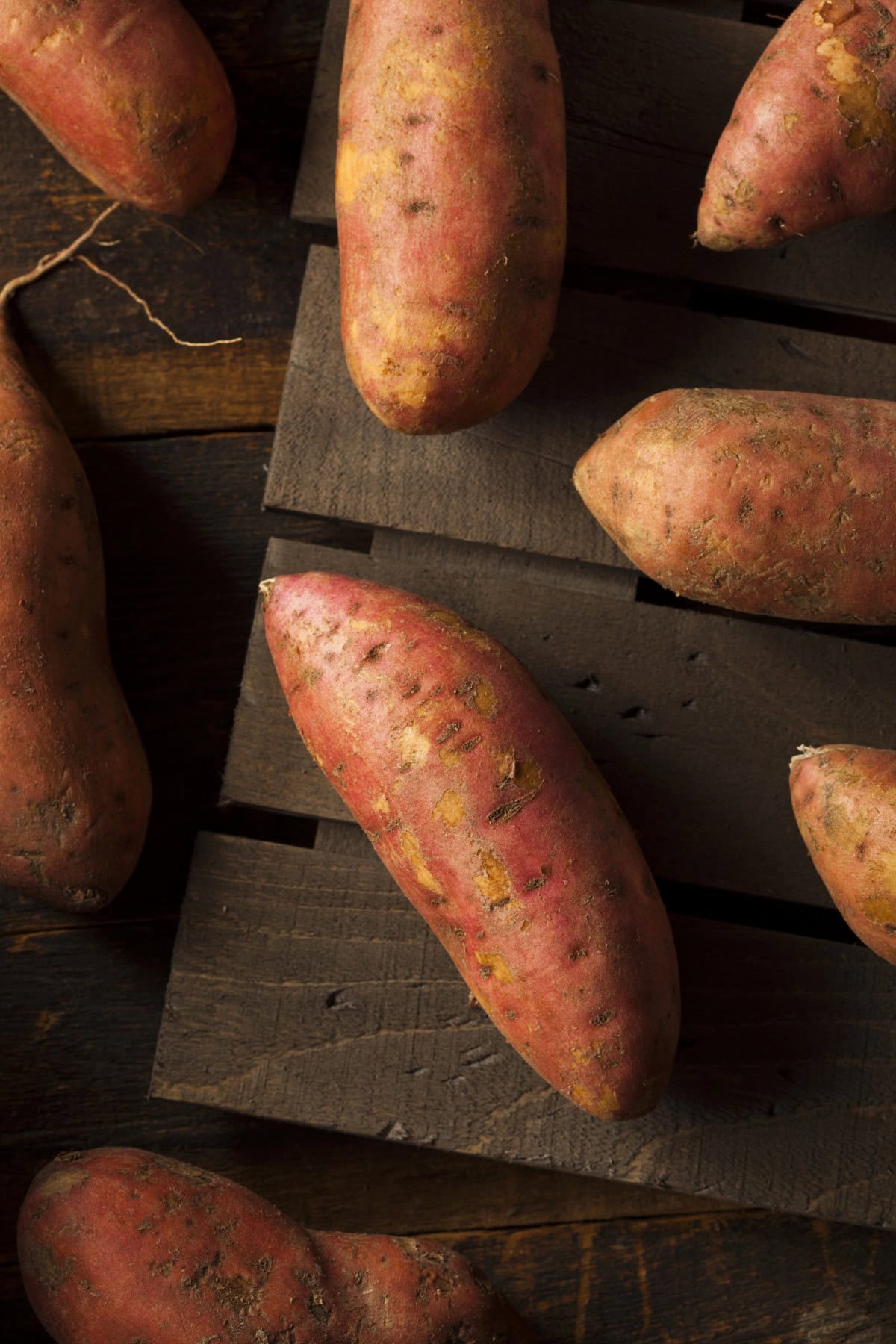
A sweet potato is a root vegetable with naturally sweet flesh. Its scientific name is Ipomoea batatas, and despite its name, it isn’t closely related to the common white potato.
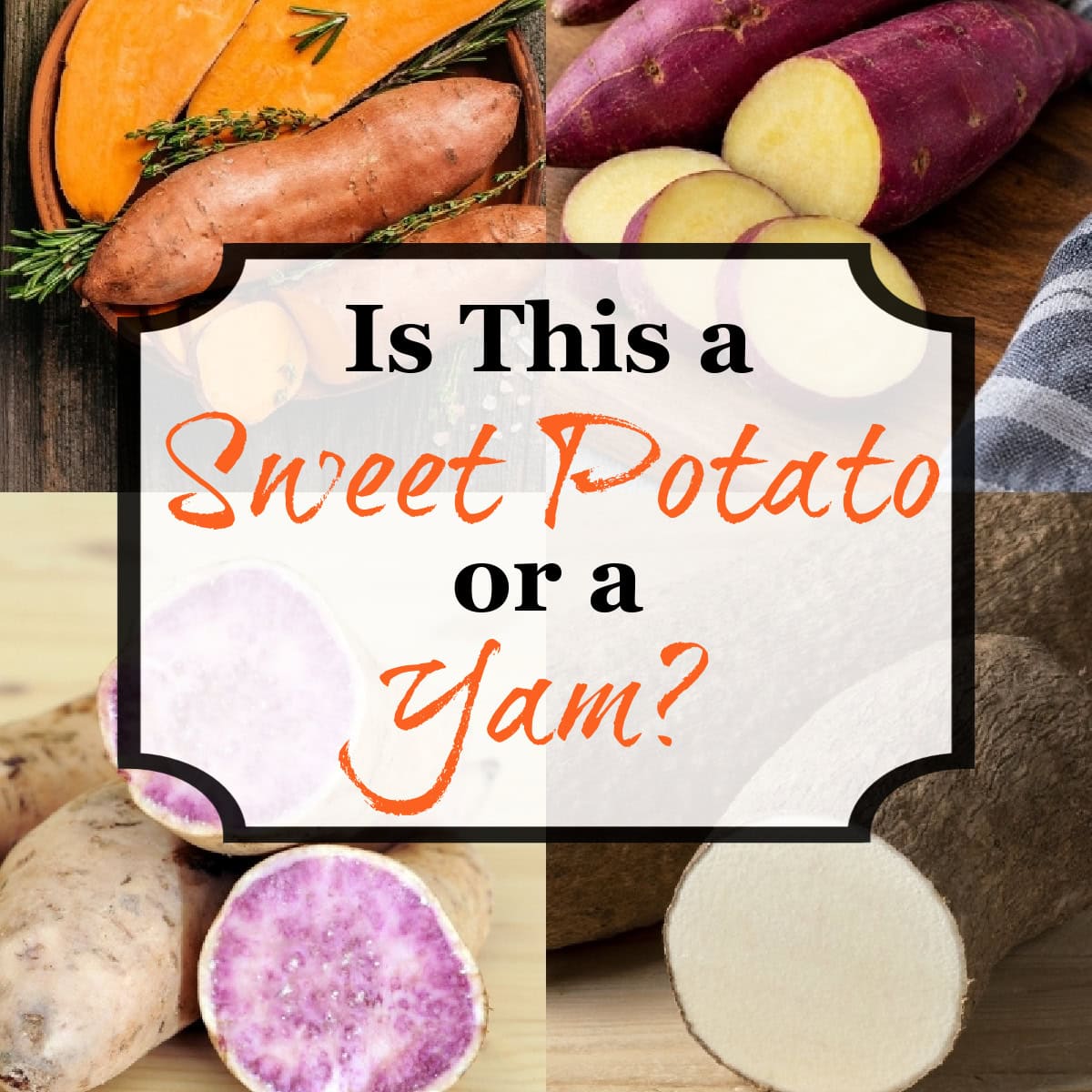
Sweet potatoes come in numerous varieties. Their skins can range from tan and copper to reddish-purple, while the flesh may be orange, yellow, white, cream, or purple.
Orange-fleshed varieties are particularly popular in North America and are frequently used for Thanksgiving and holiday dishes.
Sweet potatoes can be baked, roasted, boiled, mashed, fried, or incorporated into both sweet and savory recipes.
What Is a Yam?
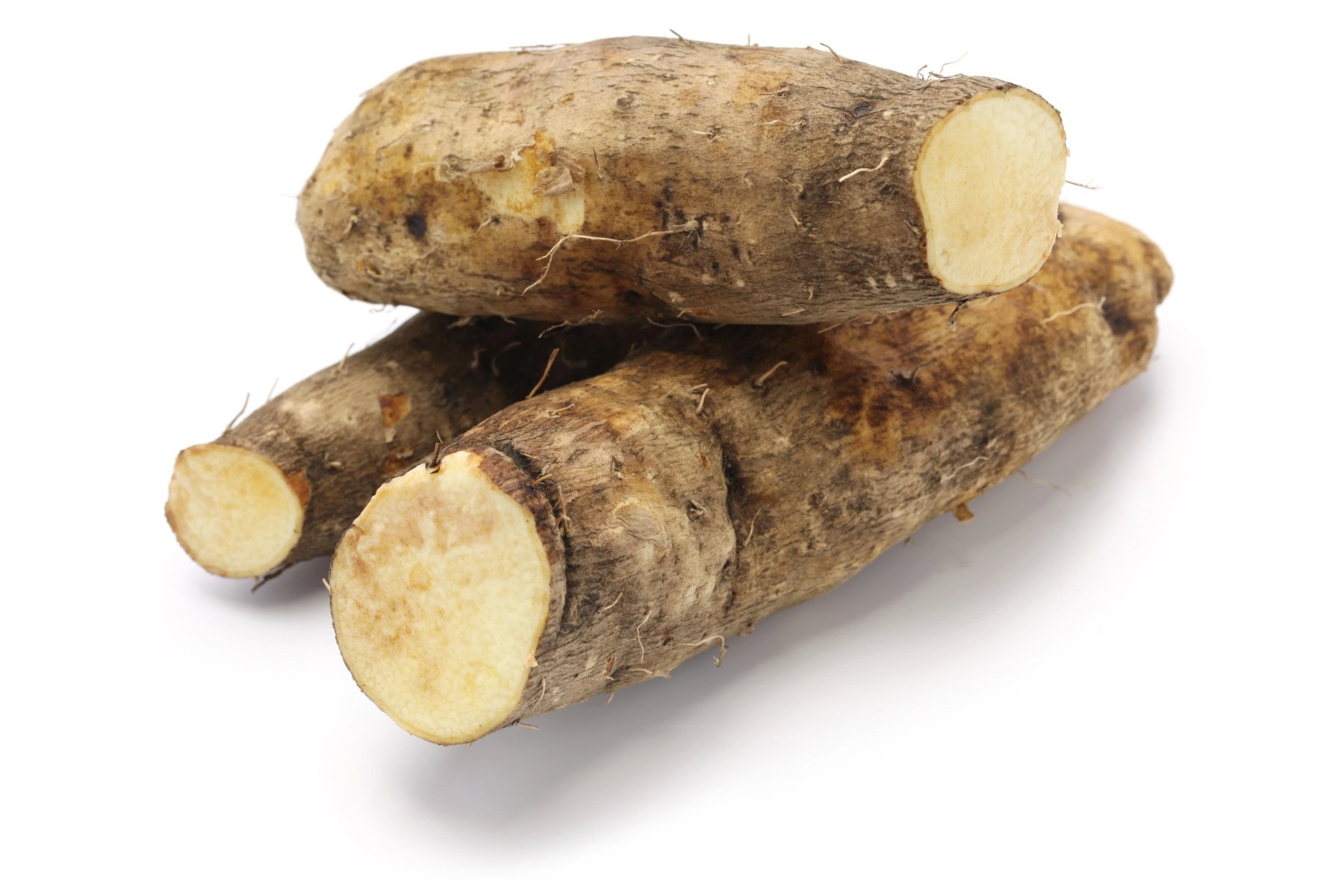
A true yam is an edible tuber belonging to the genus Dioscorea. Yams are important staple foods in many tropical and subtropical regions, particularly parts of Africa, the Caribbean, Asia, and the Pacific.
Depending on the variety, true yams can grow considerably larger than typical supermarket sweet potatoes.
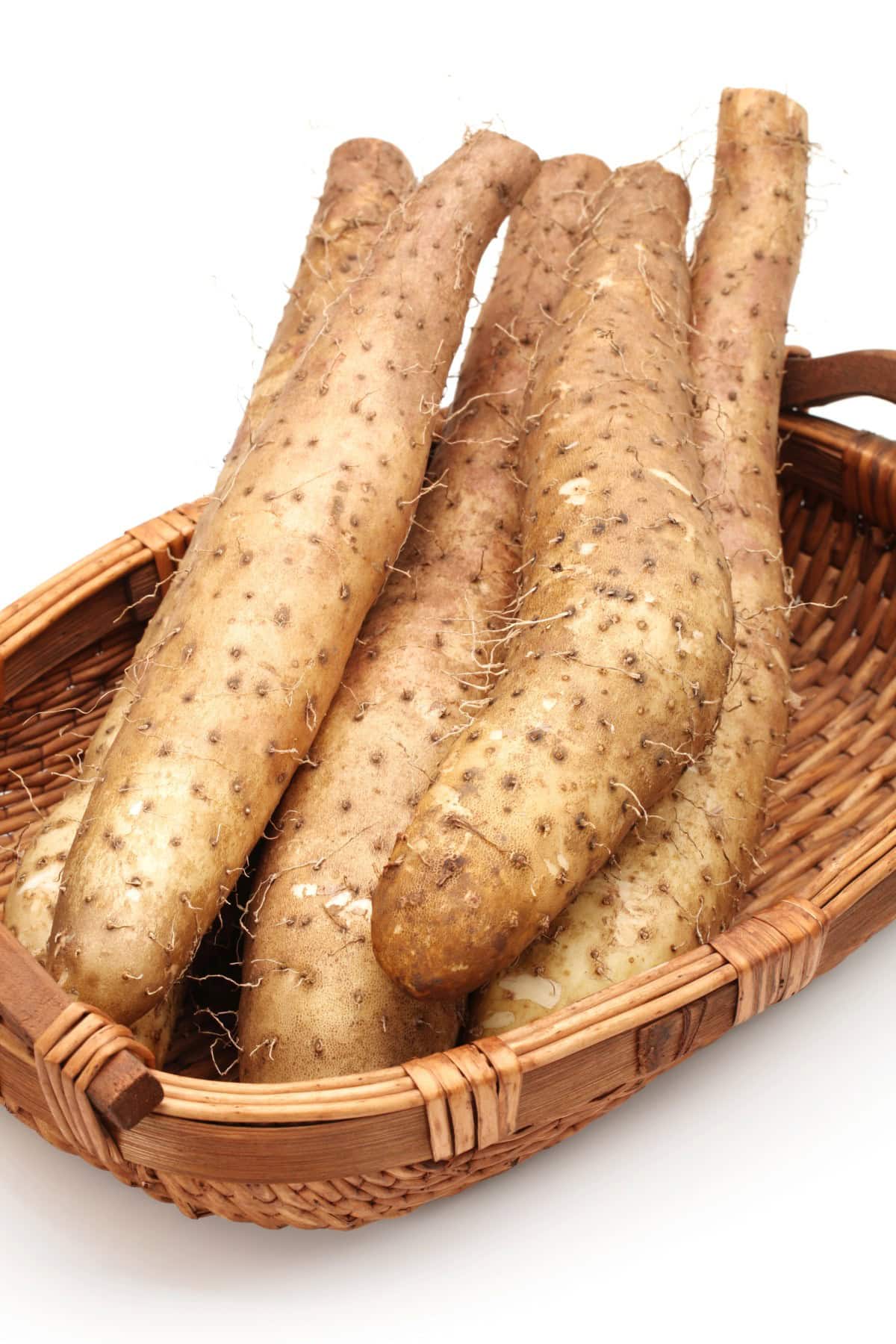
Their skin tends to be rough, thick, and somewhat bark-like. The flesh may be white, cream, yellow, or purple.
True yams generally have a drier and starchier texture than the orange sweet potatoes commonly found in North American supermarkets.
Sweet Potato vs. Yam: What’s the Difference?
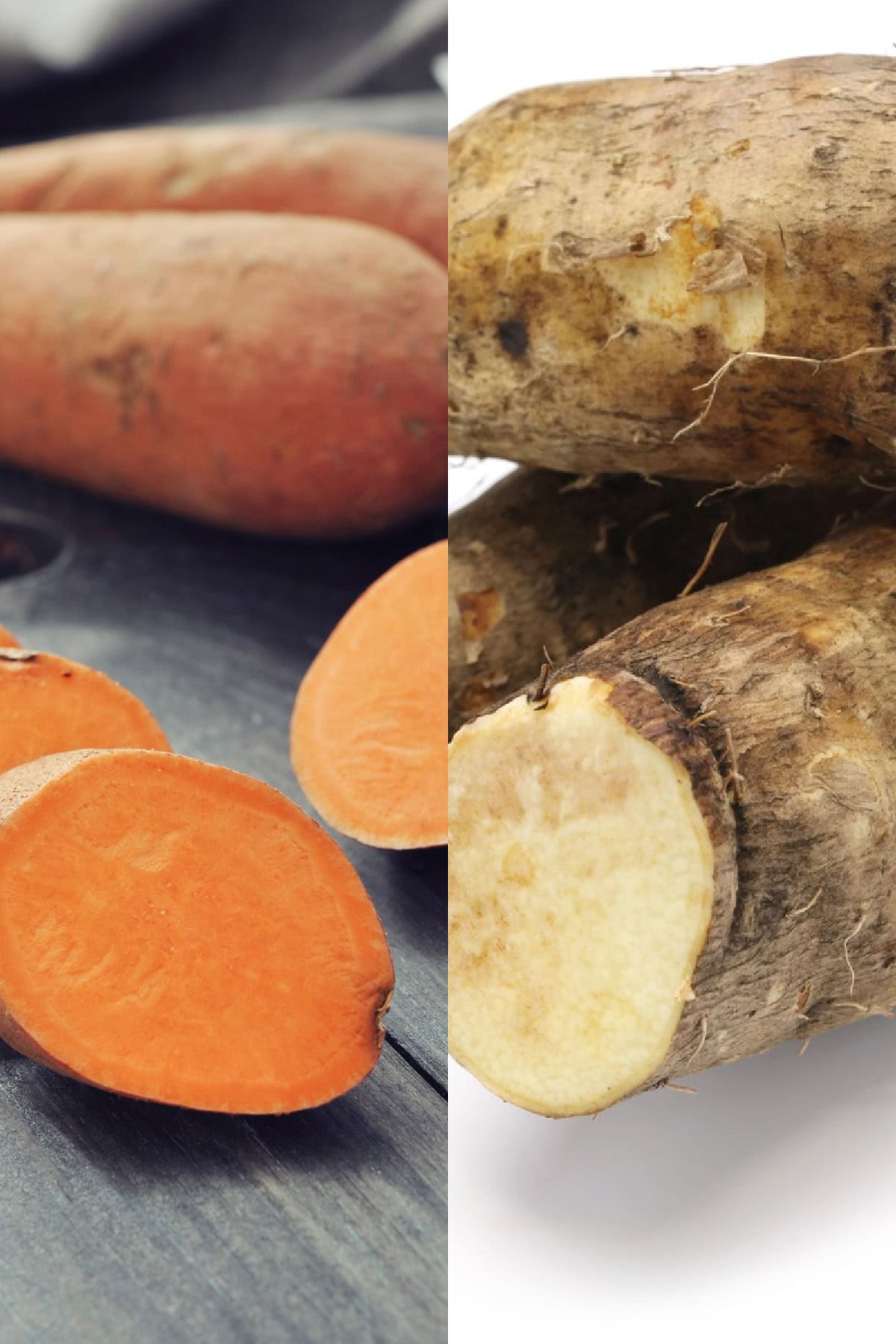
Although they can sometimes be prepared in similar ways, there are several noticeable differences.
| Sweet Potato | True Yam | |
|---|---|---|
| Plant family | Morning glory family | Dioscoreaceae |
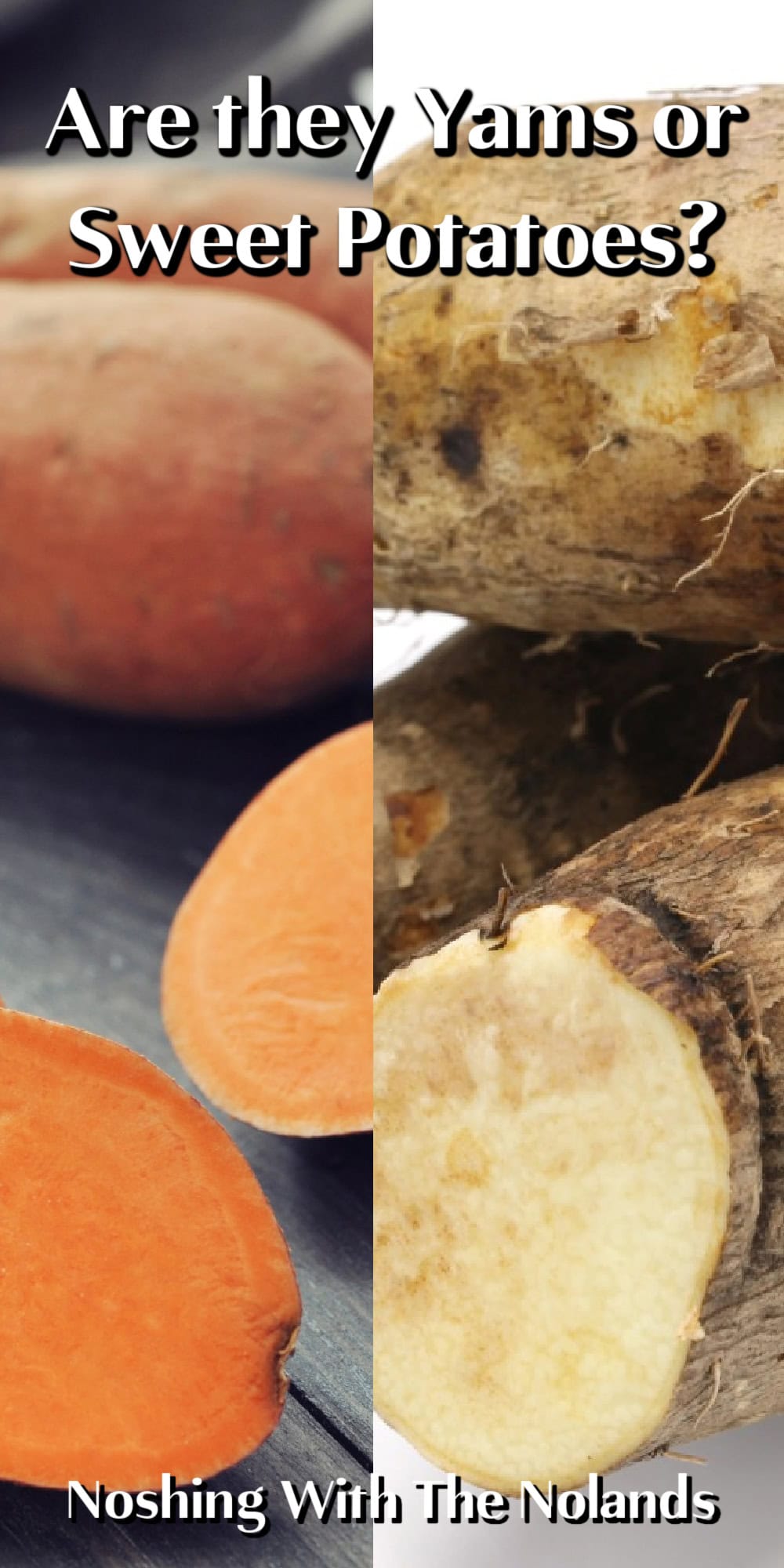
| Skin | Relatively thin and smooth | Thick, rough and bark-like |
| Flesh | White, yellow, orange or purple | White, cream, yellow or purple |
| Flavor | Usually sweet | Mild, earthy and less sweet |
| Texture | Moist, creamy or firm, depending on variety | Generally dry and starchy |
| Shape | Often tapered at the ends | Often cylindrical |
| Availability | Common in North American grocery stores | More commonly found in specialty/international markets |
Why Are Sweet Potatoes Called Yams?
The terminology has a long history in the United States.
When softer, orange-fleshed varieties of sweet potatoes became commercially popular, the term “yam” was used to distinguish them from firmer, lighter-fleshed sweet potato varieties already on the market.
The name stuck, and generations of shoppers became accustomed to calling orange sweet potatoes yams.
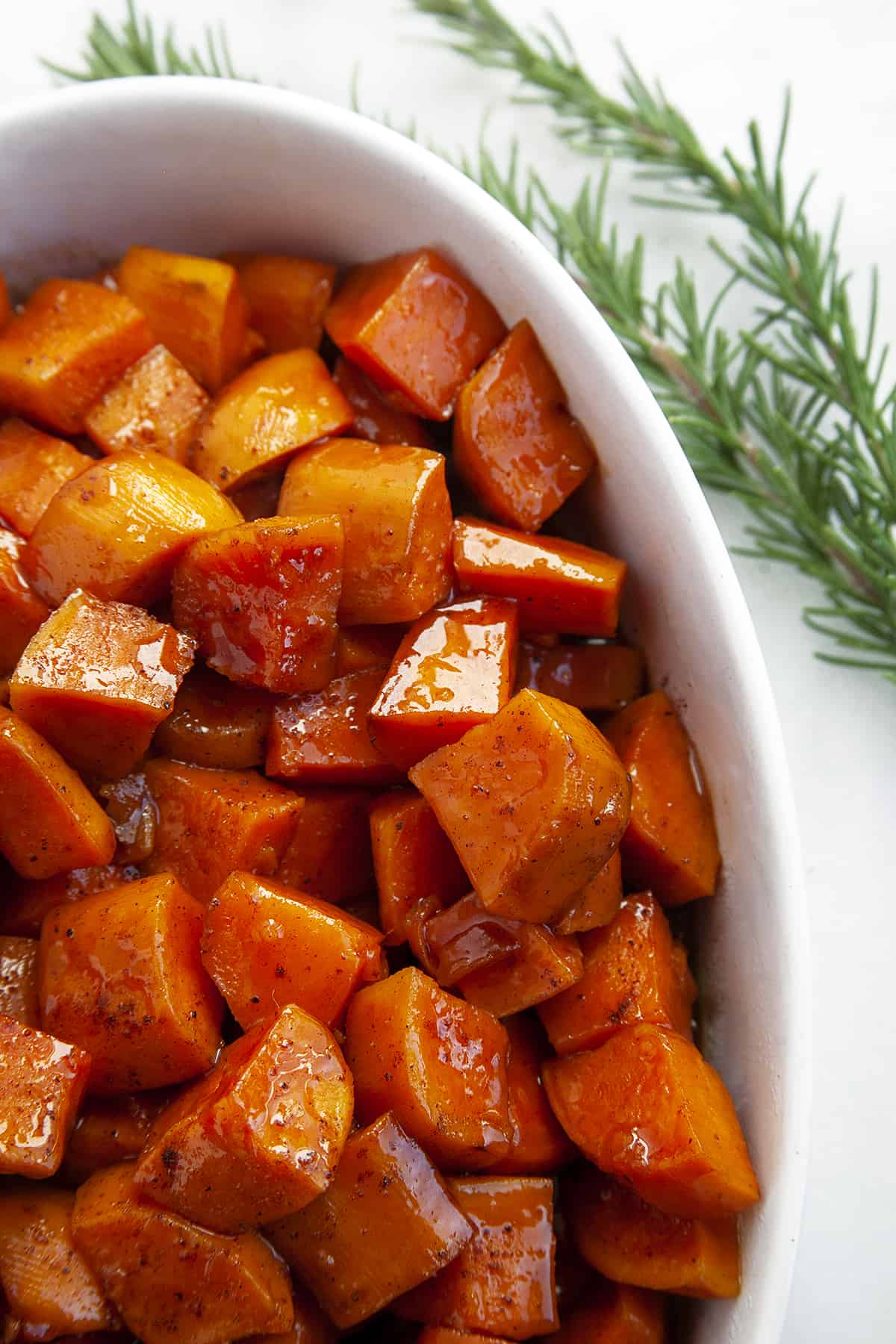
As a result, recipes such as candied yams are often actually made with orange-fleshed sweet potatoes rather than true yams. Like the above picture of candied yams, I am guilty of this too!
Are Red Garnet Yams Actually Yams?
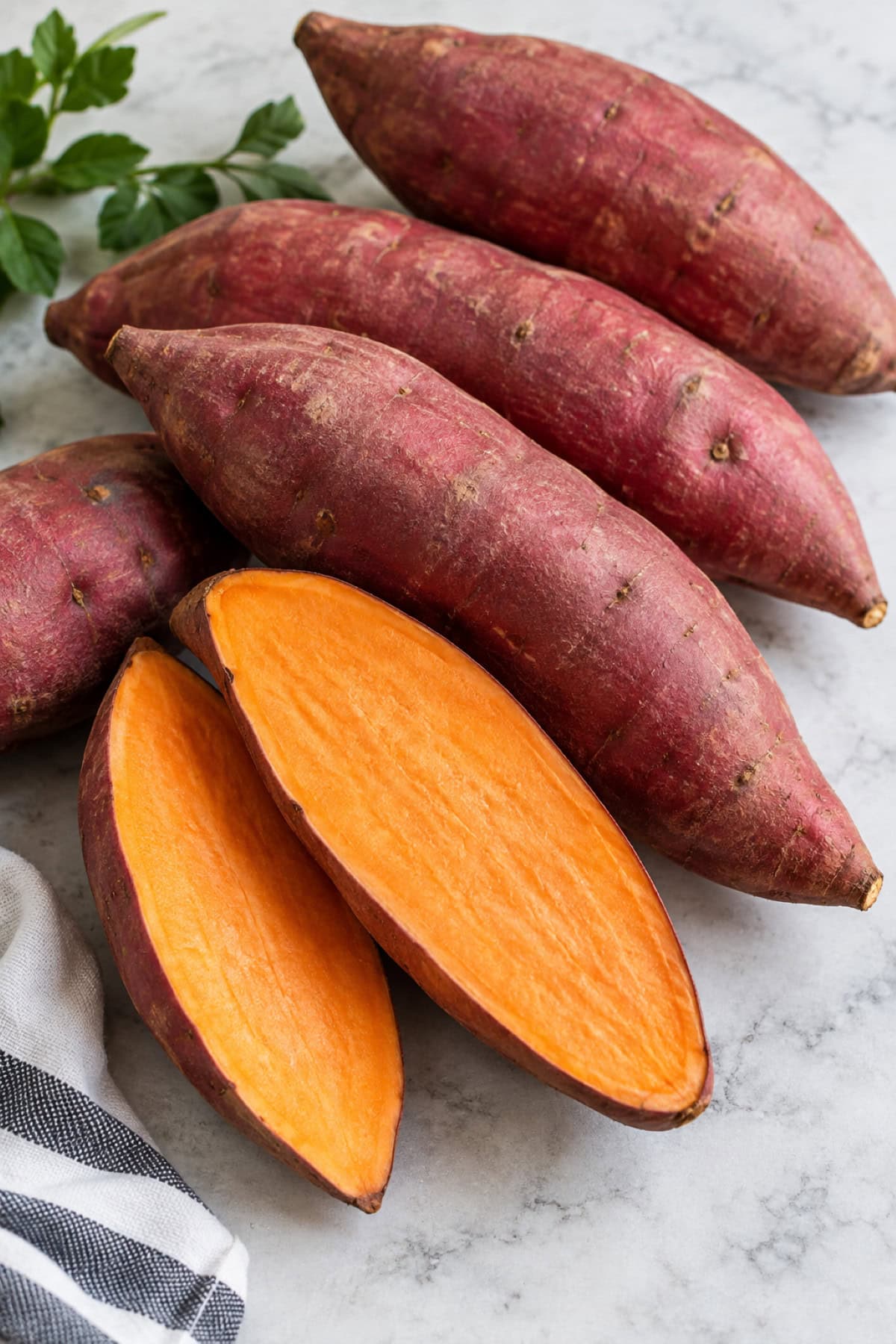
Despite the name, Garnet yams are sweet potatoes.
Garnet sweet potatoes have reddish-purple skin and deep orange flesh. They’re sweet and moist when cooked, making them excellent for baking, roasting, mashing, and casseroles.
The same naming confusion occurs with several other sweet potato varieties sold under the term “yam.”
Are Jewel Yams Sweet Potatoes?
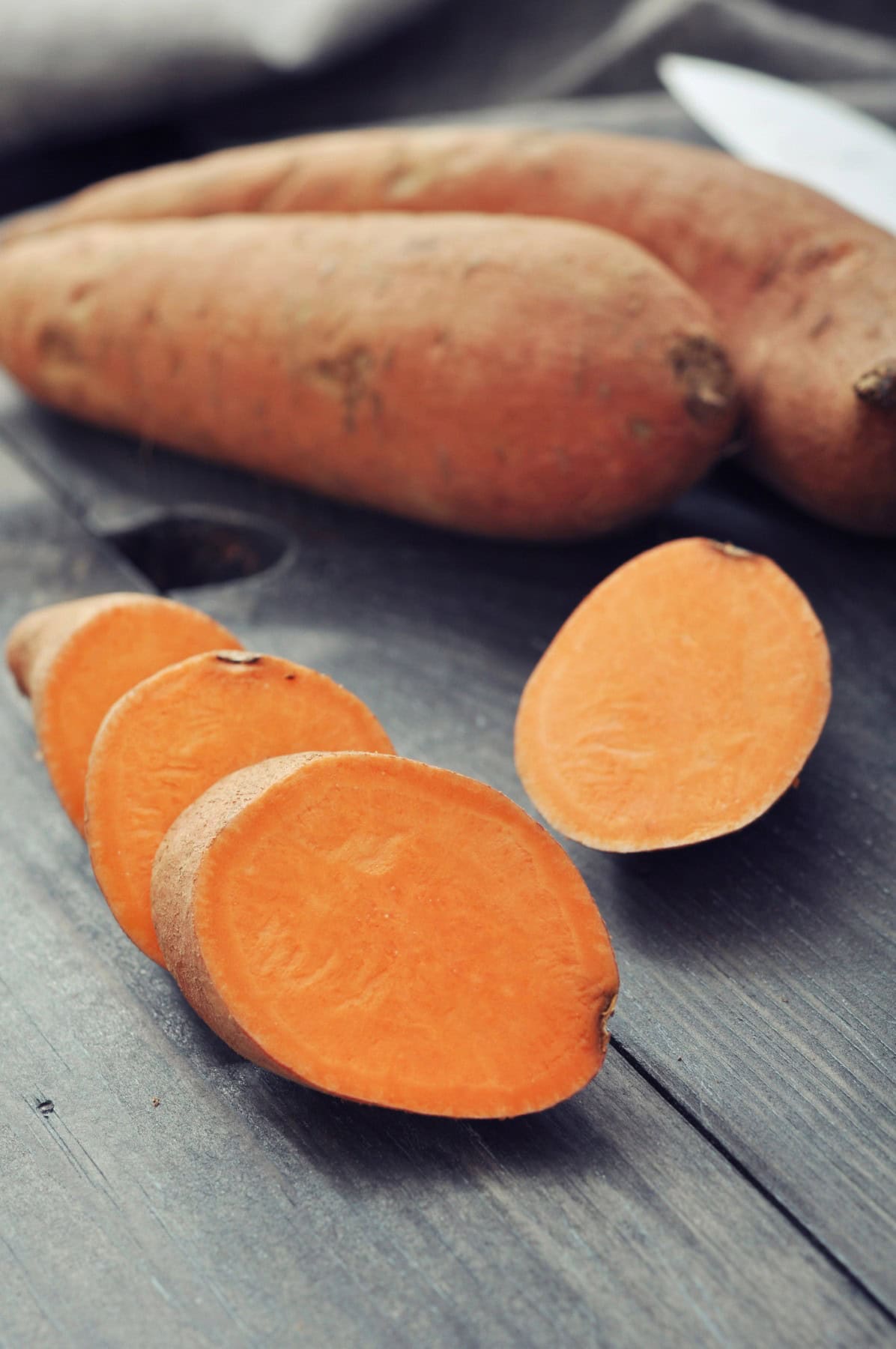
Yes. Jewel yams are also sweet potatoes, not true yams.
Jewel sweet potatoes typically have copper-colored skin and orange flesh. They’re naturally sweet and become soft and moist when cooked.
They’re an excellent choice for sweet potato casseroles, mashed sweet potatoes, baked sweet potatoes, soups, and roasted vegetable dishes.
What Are Japanese Sweet Potatoes?
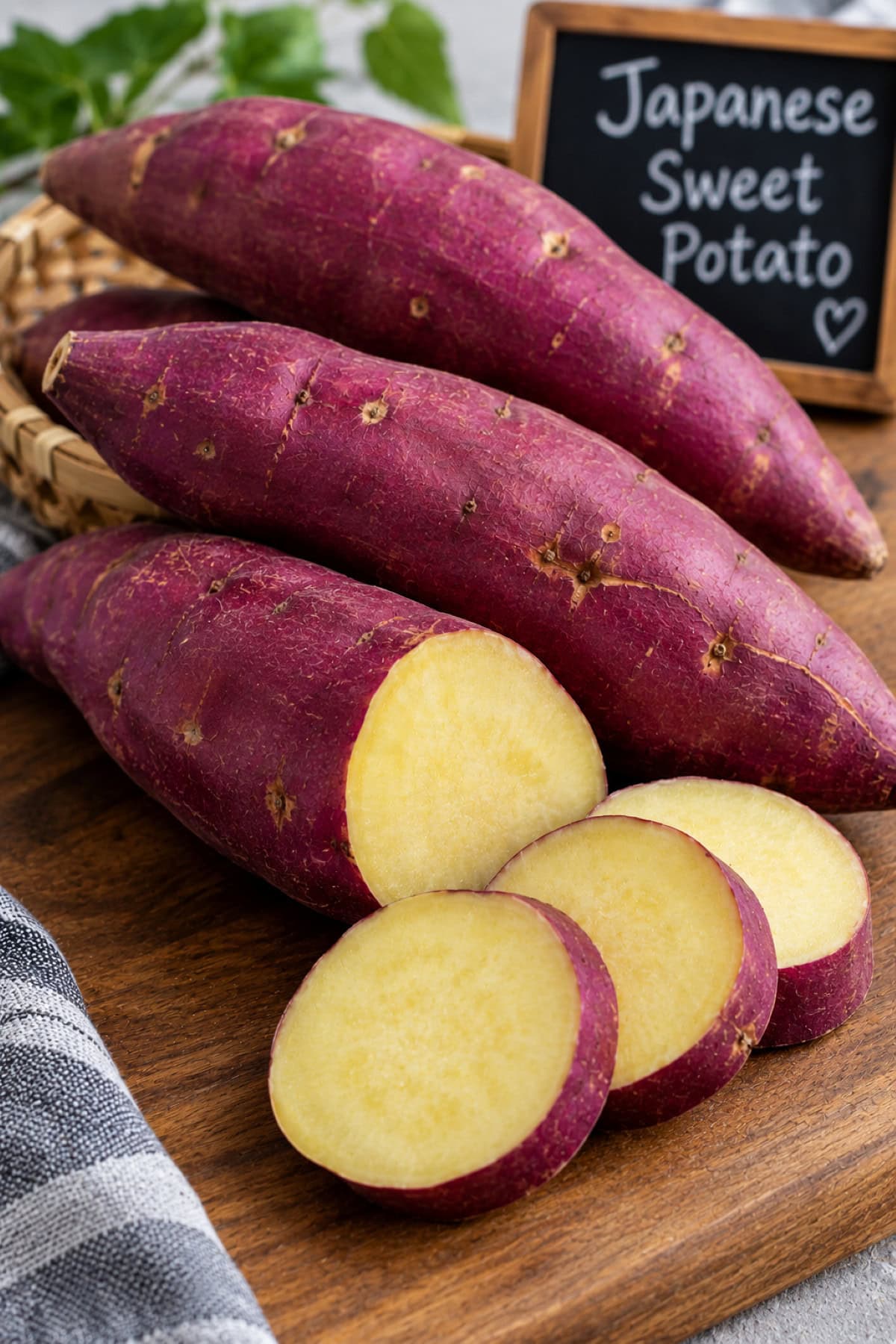
Japanese sweet potatoes are another type of sweet potato rather than a true yam.
They typically have reddish-purple skin and pale yellow or creamy flesh. When cooked, they’re sweet with a comparatively dense, somewhat dry and fluffy texture.
They’re wonderful simply roasted or baked because cooking intensifies their natural sweetness.
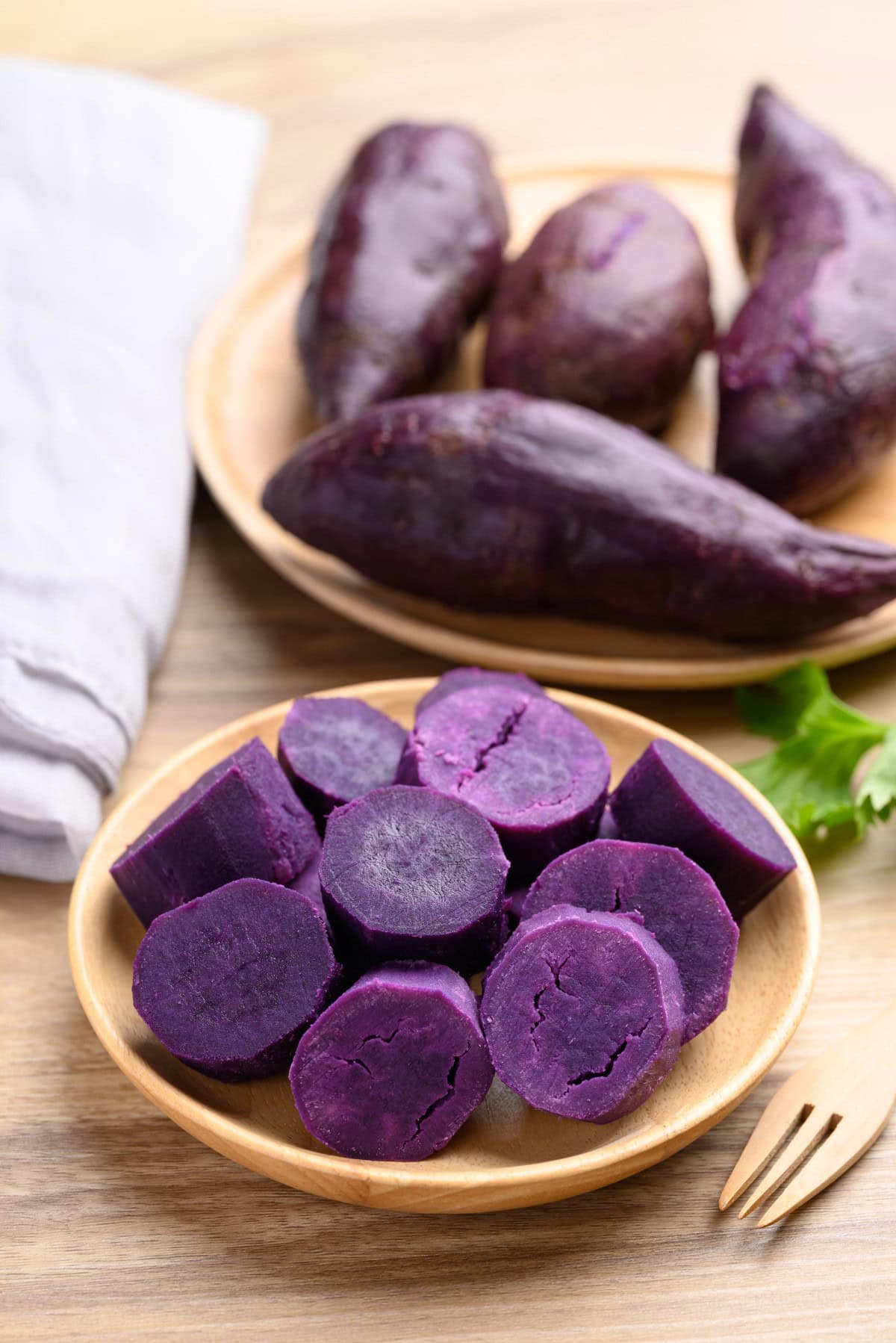
What About Purple Sweet Potatoes?
Not every purple root vegetable is a yam, either.
There are varieties of sweet potatoes with purple flesh, including Okinawan sweet potatoes and Stokes Purple sweet potatoes. Their flavor, sweetness, and texture differ by variety.
Purple yams also exist, which is another reason appearance alone isn’t always enough to distinguish a yam from a sweet potato.
Which Is Sweeter: Yams or Sweet Potatoes?
Sweet potatoes are generally sweeter than true yams.
Orange-fleshed sweet potatoes become especially sweet and creamy when roasted or baked because cooking develops their natural sugars.
True yams are usually more neutral, earthy, and starchy.
Are Sweet Potatoes Healthier Than Yams?
Both can be nutritious additions to a balanced diet, but their nutritional profiles differ depending on the specific variety and preparation.
Sweet potatoes provide fiber, potassium, vitamin C, and other nutrients. Orange varieties are especially well known for their beta-carotene content, which the body can convert into vitamin A.
Yams also provide carbohydrates, fiber, potassium, and other vitamins and minerals.
Instead of thinking of one as universally “healthier,” it’s more useful to consider portion size, preparation method, and the rest of the meal.
Can You Substitute Yams for Sweet Potatoes?
Sometimes, but they aren’t a perfect substitute.
Because true yams tend to be drier, starchier, and less sweet, substituting them for sweet potatoes can noticeably change the texture and flavor of a recipe.
For recipes such as sweet potato casserole, sweet potato pie, or mashed sweet potatoes, use actual sweet potatoes unless the recipe specifically calls for true yams.
If an American recipe calls for “yams,” especially in a traditional holiday dish, it may actually be referring to orange sweet potatoes.
How to Choose Sweet Potatoes
Look for sweet potatoes that feel firm and heavy for their size. Avoid ones with large soft spots, significant shriveling, or obvious signs of decay.
For even cooking, choose sweet potatoes that are relatively similar in size when you plan to roast or bake several at once.
Smaller and medium-sized sweet potatoes can also be easier to work with than exceptionally large ones.
How to Store Sweet Potatoes
Store raw sweet potatoes in a cool, dry, dark, and well-ventilated place. Avoid storing them in a sealed plastic bag where moisture can accumulate.
For best quality, don’t routinely refrigerate raw sweet potatoes. Cold storage can affect their texture and flavor.
Once cooked, refrigerate sweet potatoes in a covered container and use them within several days.
How to Cook Sweet Potatoes
Sweet potatoes are incredibly versatile. You can:
- Bake them whole.
- Cut them into wedges and roast them.
- Mash them with butter and seasonings.
- Make sweet potato fries.
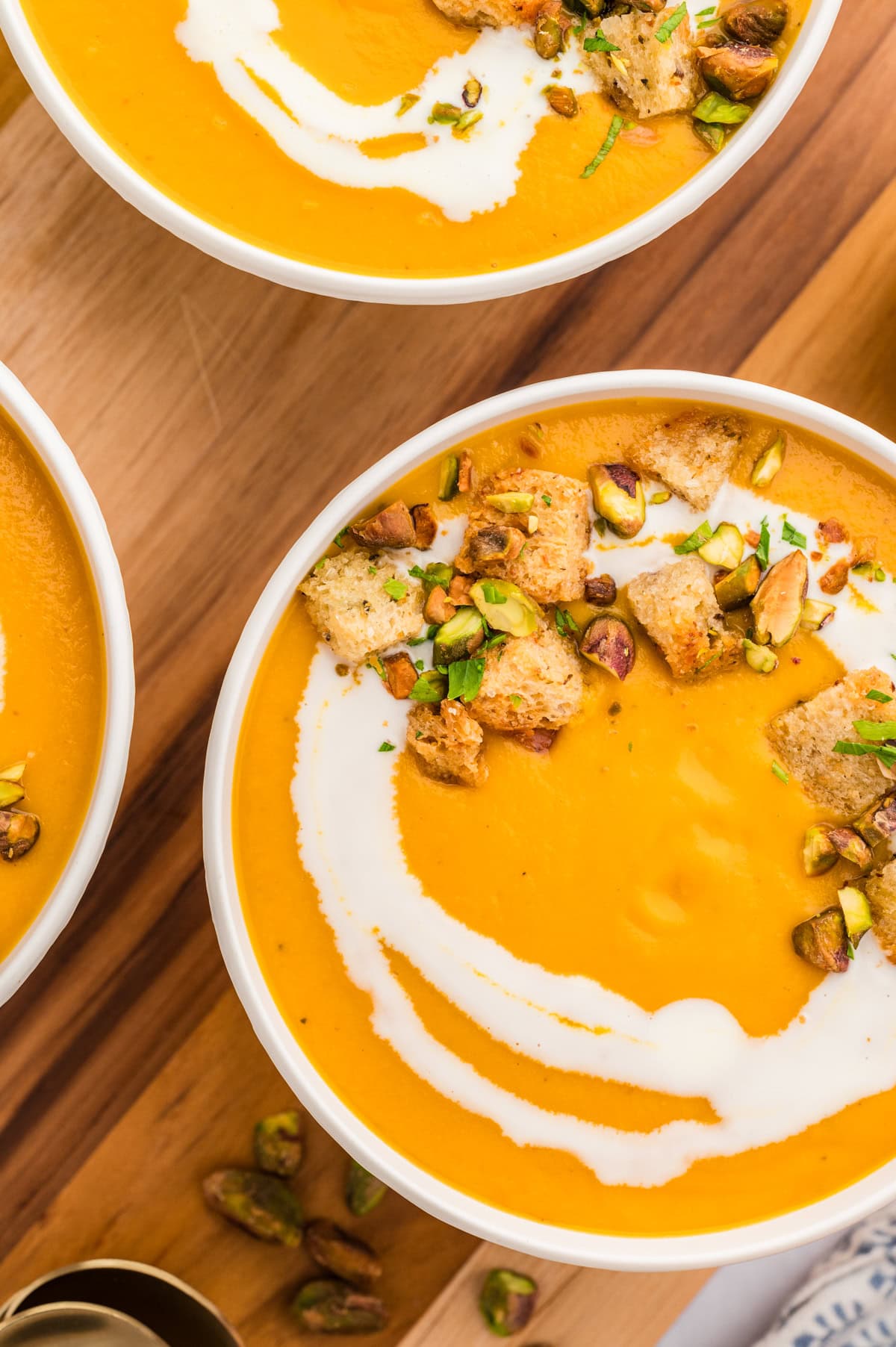
- Add cubes to soups, stews, and curries.
- Use them in casseroles.
- Turn them into pies and other desserts.
- Add roasted sweet potatoes to salads and grain bowls.
For a savory preparation, try olive oil, garlic, rosemary, thyme, chili powder, cumin, or smoked paprika. For something sweeter, cinnamon, maple syrup, brown sugar, pecans, and warm spices all pair beautifully with sweet potatoes.
Popular Ways to Use Sweet Potatoes
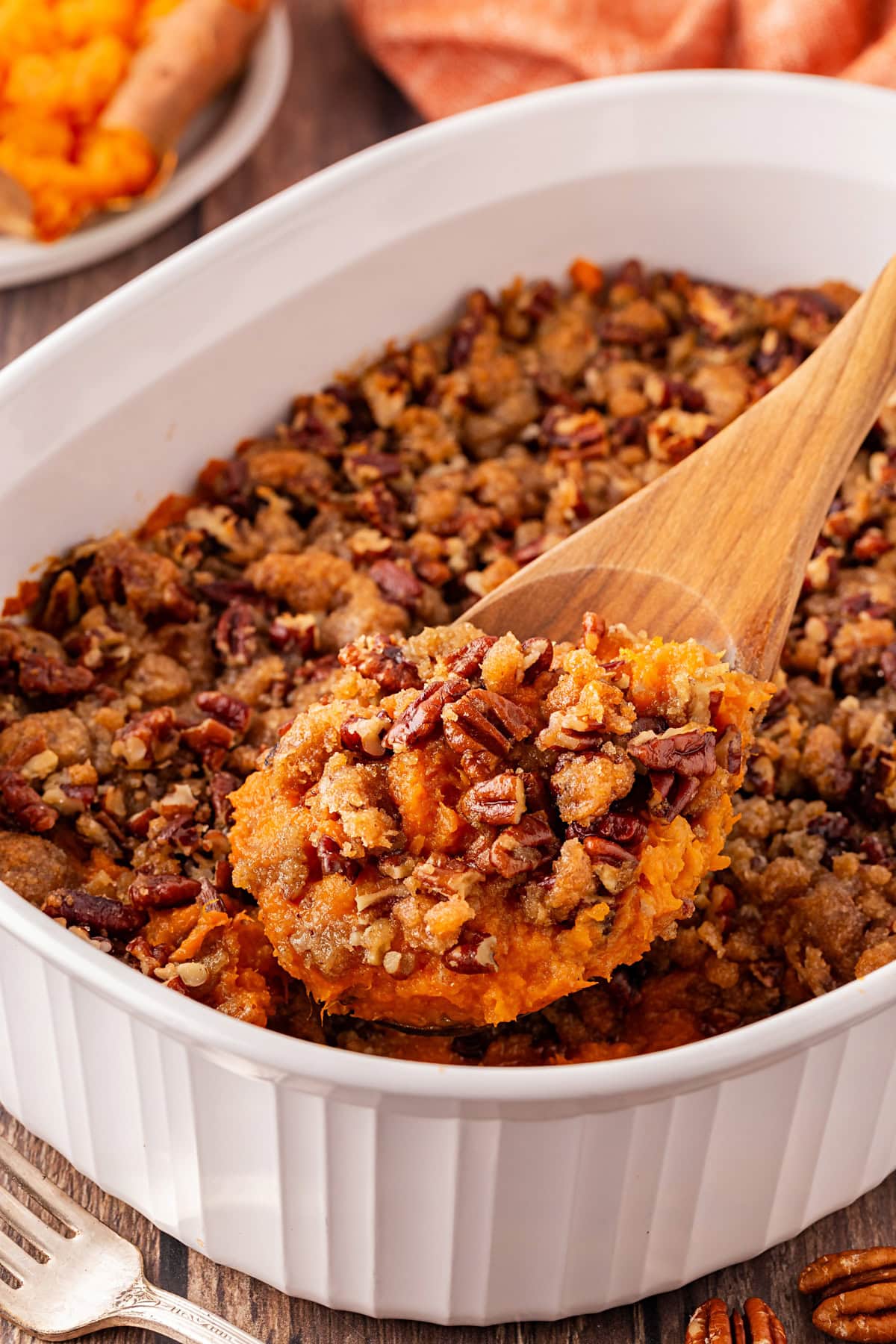
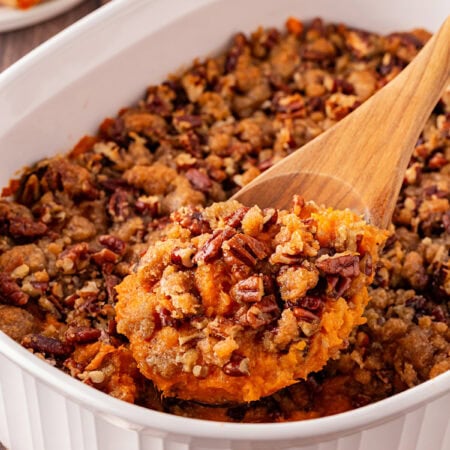
During the fall and holiday season, sweet potato casserole is one of the most popular ways to serve them. The naturally sweet orange flesh pairs especially well with brown sugar, butter, cinnamon, maple syrup, pecans, and marshmallows. Our favorite is Ruth’s Chris Copycat Sweet Potato Casserole. A must for any holiday table.
For an everyday side dish, simply roast cubed sweet potatoes with olive oil, salt, and pepper. They also make excellent mashed sweet potatoes and can be incorporated into breakfast hashes, tacos, curries, and soups.
Frequently Asked Questions
Are canned yams actually sweet potatoes?
In North America, products marketed as canned yams are often made with varieties of sweet potato. Check the ingredient list or product labeling if you need to know exactly what you’re buying.
Are sweet potatoes potatoes?
Sweet potatoes and regular potatoes are both root/tuber crops used similarly in cooking, but they belong to different botanical families. Sweet potatoes belong to the morning glory family, while regular potatoes belong to the nightshade family.
Are yams orange inside?
True yams aren’t necessarily orange. Depending on the species and variety, their flesh may be white, cream, yellow, or purple.
Why do people put marshmallows on yams?
The classic American holiday dish commonly called “candied yams” or a yam casserole is typically made with sweet potatoes, not true yams. Marshmallows became a popular sweet topping for these holiday sweet potato dishes in 1917 when a marshmallow company put out a booklet featuring this combination.
Which should I use for sweet potato casserole?
Use an orange-fleshed sweet potato, such as a Jewel or Garnet. Their sweet flavor and moist, creamy texture make them particularly well suited to casseroles.
Which is better for roasting?
Both can be roasted, but they produce different results. Sweet potatoes become tender and naturally sweeter as they roast, while true yams tend to remain starchier and have a more neutral flavor.
The Bottom Line: Yam vs. Sweet Potato
The biggest thing to remember is simple: a yam and a sweet potato are not the same vegetable.
Sweet potatoes typically have relatively smooth skin and can have orange, white, yellow, or purple flesh. They’re naturally sweet and widely available throughout North America.
True yams generally have rough, bark-like skin with starchier, less-sweet flesh and are more commonly found in international or specialty markets.
So the next time you see a pile of orange “yams” at the grocery store, take a closer look. Chances are you’re actually looking at sweet potatoes!
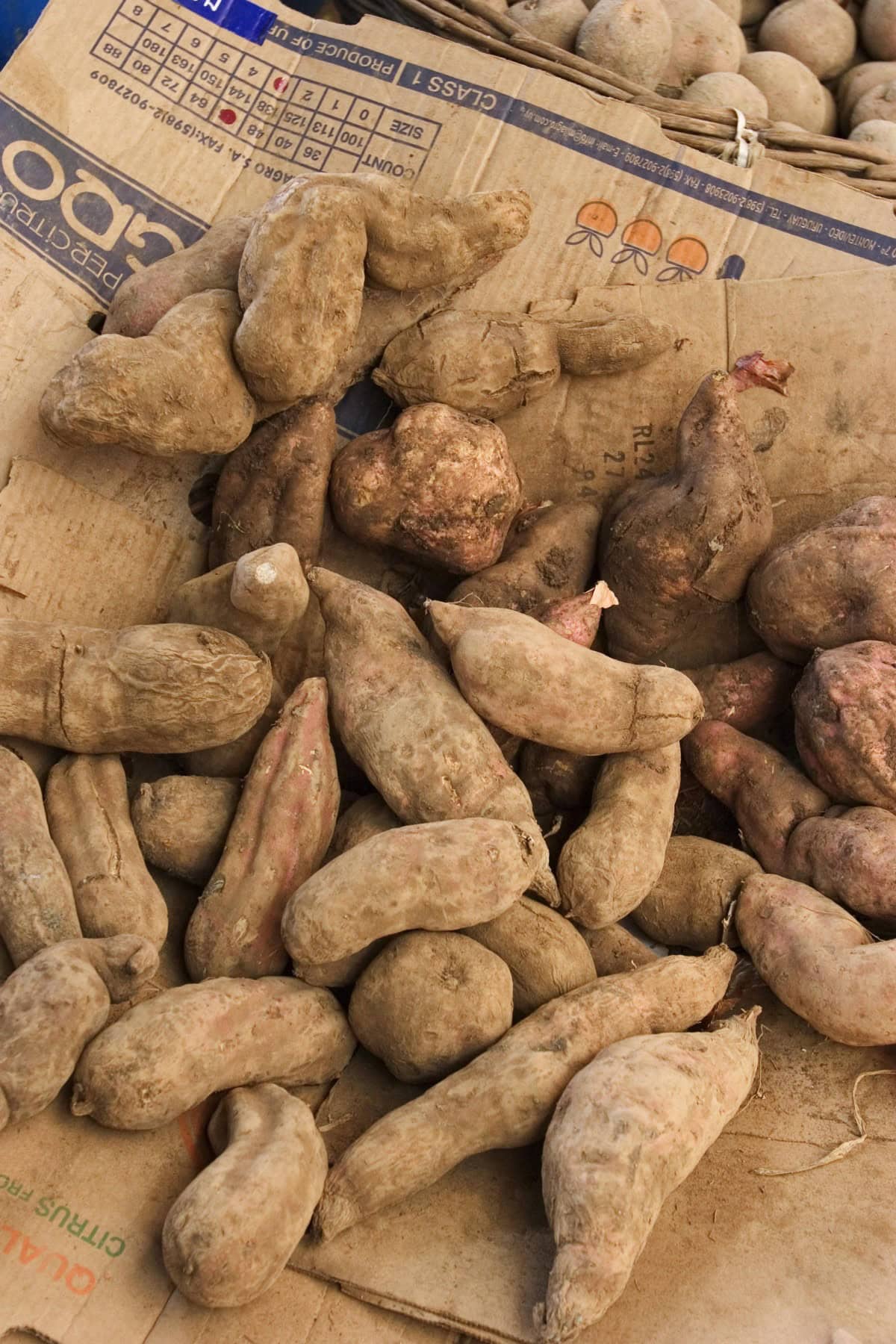
You open up a box and find these!! Are they yams or sweet potatoes??? Tell me your guess in the comments.
Pin it HERE!!
Pin it HERE!!



Let us know what you think!
We’d love to know what you and your family think! Make sure to leave a review below and follow us on your favorite social network!